Is there a vicar in this one?

SPOILER ALERT! If you haven’t read The Little Church by the Sea don’t read on!

Several people have asked me whether my new novel, The Manor on the Moors is a sequel to The Little Church by the Sea. It’s not a direct sequel – I felt that Cass and Hal’s story was complete at the end of Little Church and I wanted to create some new characters rather than give my existing ones new problems to face. But it is set in the same place, so you will find some familiar faces appearing, but more than that, you’ll recognise some of the settings.
cropped-image2-3.jpg

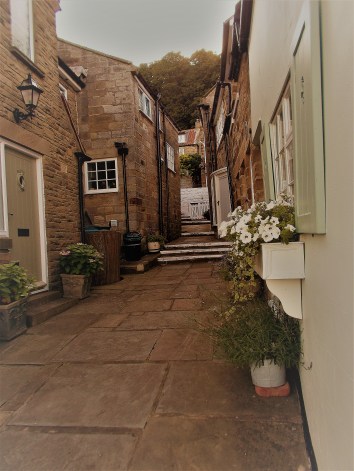
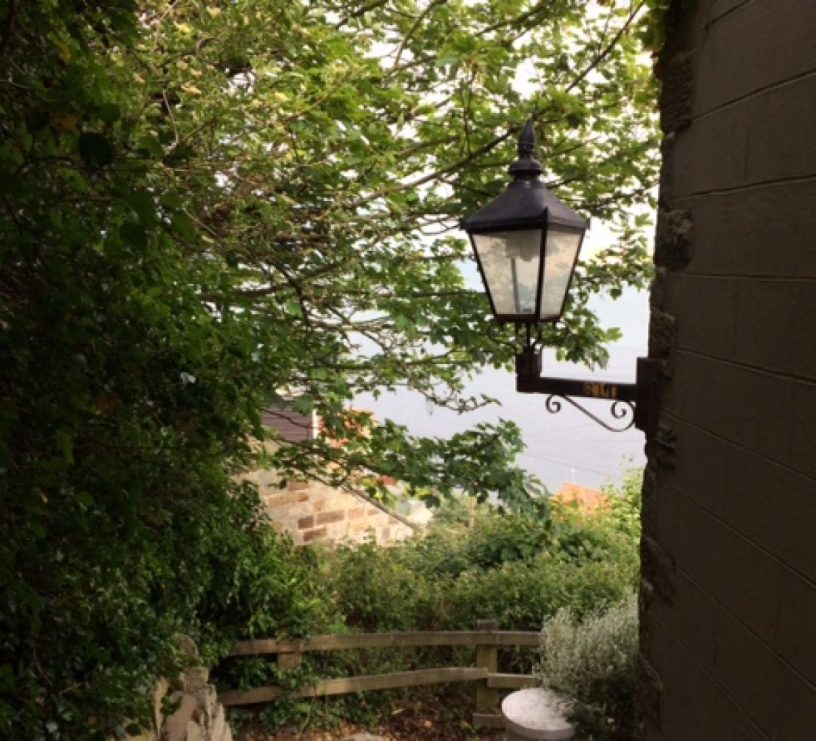
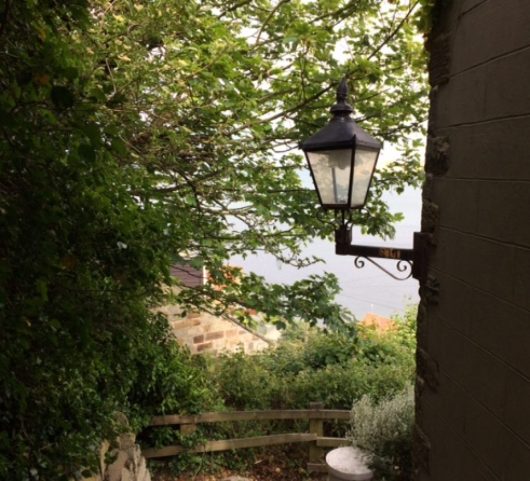
A corner of the village, Runswick Bay. (My photo).

In Manor Alice lives half way down the main street in Rawscar, the main setting for Little Church. She’s hiring a flat above a holiday cottage agency and the eagle eyed among you may remember that in Little Church Hal, the hero, ran a holiday cottage firm and lived in the flat above the office. Now, of course, Hal lives in the new vicarage (which has been built in the grounds of the former Old Vicarage)  with his wife. That makes him Alice’s landlord.

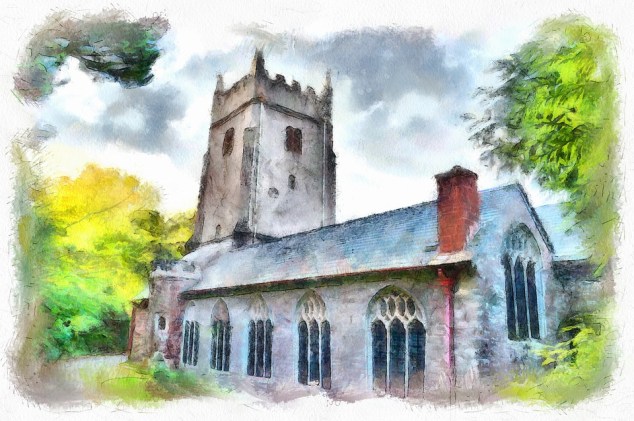
Cass in Little Church had four churches in her combined parish. One of them was the church at Langbarnby, the village where Misterley Manor was based. So when a major disaster strikes, the vicar is sure to be on hand to help out.
cockington-church-1406911_960_720

Image from Pixabay.

But most importantly, when I was asked “So, are there any knickers in this one?”  I instantly replied, “No, Alice doesn’t have any knickers …” which didn’t come out quite how I meant it. One of the running jokes in Little Church was the vicar’s underwear – largely because I had used The Vicar’s Knickers as a working title for the novel, and so they crept in all over the place. This novel is different. And I should point out that yes, Alice and Caroline do both have knickers on (most of the time …)

knickers

Image from Pixabay

Blog tour


blogtour manor

I’m on (virtual) tour of all these lovely book blogs over the next couple of weeks.  Please check them out (not just for my reviews but for lots of other bookish content too).

Authors would be nowhere in this fast moving world of social media without the encouragement of book bloggers, who share their knowledge and experience, their help and support, freely and generously.

And apologies for being a day behind with my posting – this should have been yesterday, but I got a bit confused with the dates and scheduled it wrongly!

And a huge thanks to Tracy Fenton and my publisher, Manatee Books for sorting out this tour for me.

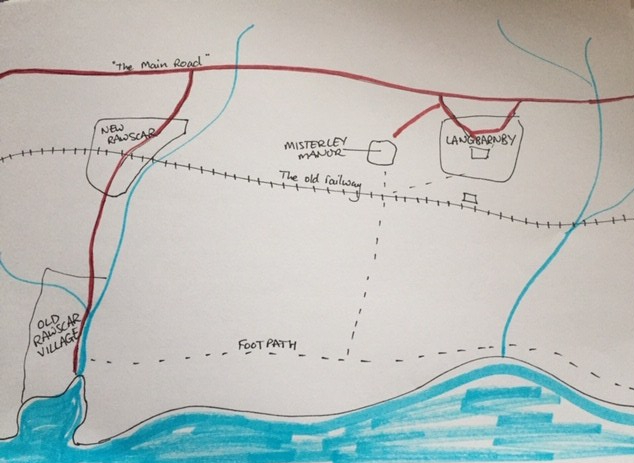
Langbarnby, Misterley and Rawscar.

The Manor on the Moors like it’s predecessor The Little Church by the Sea is set in the fictional area of North East Yorkshire. If it was real, it would appear on the maps north of Whitby but south of Guisborough … somewhere ….

Alice is living in Rawscar, the seaside village at the heart of The Little Church by the Sea which would look a bit like this:

DSCN0510 (2)

Runswick Bay (my photo)

Langbarnby is slightly further inland, it’s a moorland village about three miles away from Rawscar. In my imagination it looks not entirely unlike Goathland, but it’s slightly closer to the sea (Goathland is in the middle of the North Yorkshire Moors, surrounded by a sea of heather. It’s gorgeous. Go there!)  The two villages are closely linked: they share a vicar for a start, and a traditional rivalry that still spills over in the Shrove Tuesday football game that I’m writing about in my next novel.

goathland manor

Goathland (photo from Pixabay)

Misterley Manor is on the Rawscar side of Langbarnby.  It’s not based on any real place though in my imagination, as I’ve already said, it looks a bit like Grey Towers, the stately home on the edge of Middlesbrough. Misterley is a made up name. (Of course ALL the names were made up by me in the first place …) Whereas both Rawscar and Langbarnby are names that could feasibly be of Old Norse origin (a nod to the Viking settlers on the north-east coast of England) “Misterley” was invented by the Lattimore family when they became rich (as was their own surname) because “Langbarnby Hall” didn’t sound grand enough!

I’m not an artist, by any stretch of the imagination, but this is a quick sketch that I drew for my own use of the area around Rawscar and Langbarnby. Please forgive the poor quality of drawing, the fact that it isn’t to scale and you’ll have to imagine the moors and the hills for yourself! (Basically, the moors come down to where the old railway line is).

image1-23.jpeg

An introduction to … Gilbert Fox-Travers

Gilbert Fox-Travers is at the heart of the story of Misterley Manor and its inhabitants, even though he lived a hundred years ago. He was the architect employed to turn plain old Langbarnby Hall into the astounding Misterley Manor for Sir Edward Lattimore and his wife, Lady Isobel.

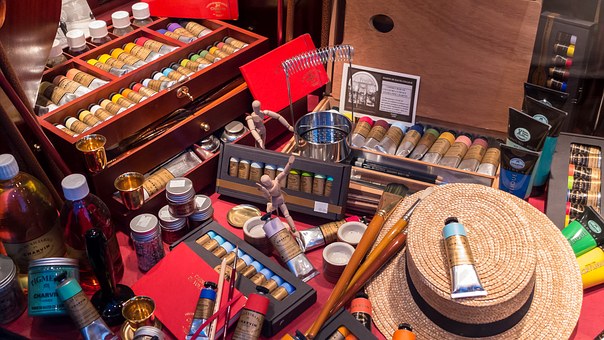
An up and coming young architect Fox-Travers is a young man with a reputation for two things – the first being his extraordinary artistic imagination, the second his reputation as a ladies’ man. He combines the two elements of his reputation in his best known pictures – three notoriously erotic Arthurian scenes that hang in the Painted Gallery at Misterley Manor, the last of the great treasures of the house.

fox-travers

image from Pixabay


No sooner is the work on Misterley Manor (carefully overseen at every stage by Fox-Travers himself) than he disappears, never to be seen again. But finally, the family papers relating to the building of Misterley have been unearthed by the Lattimore family, and Alice is hoping to find out what happened.

‘Sometimes,’ [said Sebastian to Alice], ‘I think you love Gilbert Fox-Travers more than me,’ he said, sulkily.

Sometimes, recently, Alice had begun to wonder if she did too. The long-dead artist and the mystery of his disappearance had been the focus of her academic studies since her undergraduate days and sometimes he felt as real to her as the living, breathing people around her.

I should like to stress that Fox-Travers, his paintings and his romantic history is COMPLETELY fictional!

An introduction to … Aunty Marjorie.

My favourite character in the whole novel is possibly Marjorie, Caroline’s eccentric aunt. She crept in from an unpublished early novel, now banished to that shoebox under the bed, but I couldn’t quite shut the box on Marjorie, so here she is, reborn.

Marjorie is a confident woman in her seventies who knows her own mind and will not conform to what her family, her friends or society expect of her. Widely travelled and open minded she has experienced more than all of the other inhabitants of Misterley put together!  Though if you want to know what she got up to on the beach with Pedro in the 1960s you’ll have to read the novel …

marjorie boots

Image from Pixabay. Marjorie is considerably older than this model, but this is exactly the kind of outfit she would choose for a country walk.

‘There was an older lady in the courtyard. A tall lady, short grey hair, parrot earrings and a purple kaftan? She let me in.’

‘Ah. I see. Aunty Marjorie,’ said Caroline, with a sigh.

Who else could it have been? That woman was a law unto herself.

Like the rest of her family, sometimes Marjorie’s absent-mindedness (she regularly locks herself out of the house) and lack of focus can hinder Caroline’s attempts to keep the Manor in one piece. But Marjorie’s heart is always in the right place … even if she can’t quite remember where that place is ….