The Manor on the Moors

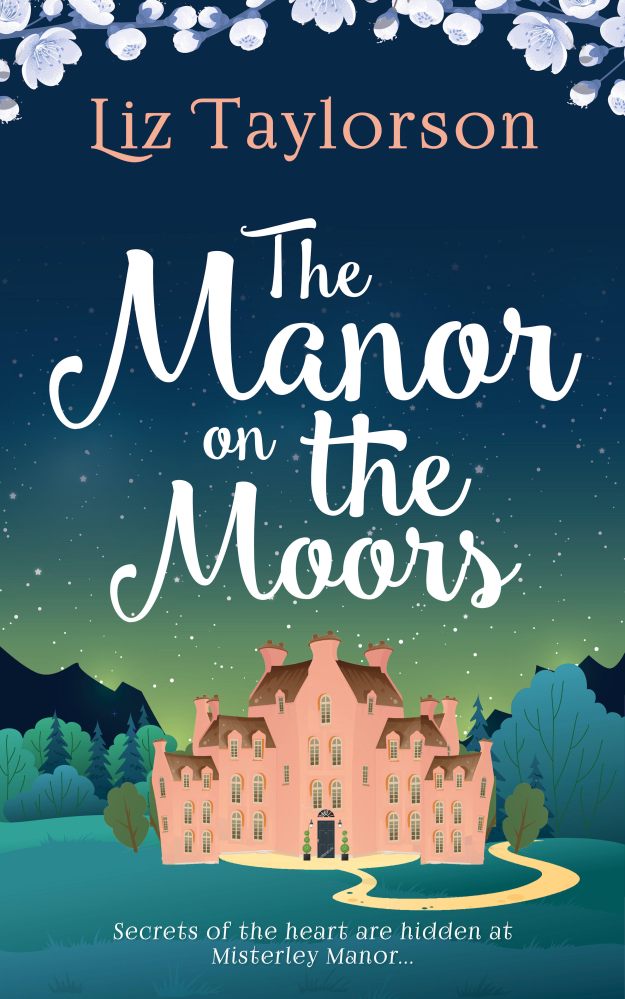
I’m delighted to have a new book, The Manor on the Moors, which will be published by the lovely people at Manatee Books on January 24th.

The Manor on the Moors tells the story of the inhabitants of Misterley Manor, a rambling and rather ramshackle mansion on the edge of the Yorkshire moors. It’s promising architect, Gilbert Fox-Travers disappeared not long after completing the house in the early years of the twentieth century and Alice, an art-historian studying for her PhD, has come to investigate the archives and try to uncover the truth about his disappearance. Sir Henry, the elderly owner, is less than keen on having any of the secrets of Misterley uncovered, but his daughter Caroline knows that they need the money and publicity that Alice’s work might bring to keep the crumbling old house standing.

Everyone at Misterley has something to hide. Caroline doesn’t want her father to know how desperate things really are financially. Alice isn’t sure that she really loves long-term partner, Sebastian, and she is increasingly attracted to Tom the gardener – but is Tom being entirely honest with her? Then there’s Caroline’s interfering ex-husband Duncan who keeps showing up when he’s not wanted, her daughter Emily who doesn’t want her mum to know that she’s dating a builder, and Caroline’s eccentric aunt Marjorie who is always doing something unexpected.

Then a huge disaster strikes Misterley and secrets become increasingly difficult to keep …

It’s available for pre-order now!

The Winter That Made Us by Kate Field. A book review with a sense of place (and some spoilers).

This is the second of Kate Field’s books set in Ribblemill, a Lancashire village, and I’ve chosen it to review for the first of my place related book reviews for two reasons. Firstly (honesty time!) Kate is a friend, so I can’t review it on Amazon, and secondly it’s a book with a really grounded sense of place, Kate’s locations tell part of the story for her.  Some novels could be set anywhere – a generic beach, a generic cottage, a generic street, but The Winter That Made Us like its predecessor The Magic of Ramblings has its feet firmly in Lancashire. It also exemplifies exactly what I love about a well-placed novel.

Horses, Pendle Hill, Lancashire, Colne

Pendle Hill, Lancashire. Image from Pixabay.

Place names are important. The wrong place name can ruin a book as far as I’m concerned. A cosy crime set in the Cotswolds where the village is called “Polwhiddle”? You can forget that for a start. Similarly a Cornish tea-shop romance where the setting is called “Derwick-upon-Dyne”? Don’t even go there – literally. So for me Ribblemill has a big plus in that it sounds like it could exist – I even had to check that it wasn’t a real place before I started writing this! The choice of name puts us firmly in a Lancashire (or very possibly Yorkshire) in a village set around a mill near the River Ribble. Mills are synonymous with Lancashire and so even before you’ve read a word of the book, you’re grounded in the idea of a place.
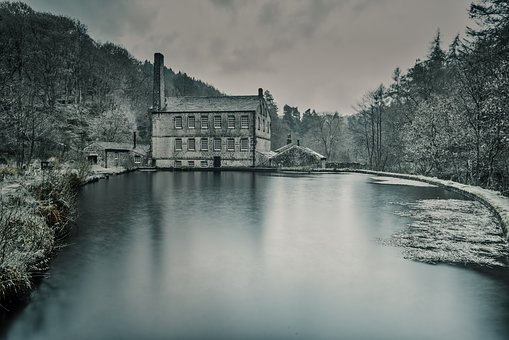
gibsons-mill-3462848__340

Gibson’s Mill, Yorkshire (sorry, couldn’t find a Lancashire one). Image from Pixabay.

In this book, we start with the specific details of place, rather than the grand gestures. A well-tended grave, a lane leading away from the village green and a grey detached stone house are the first details of place we get. And what telling details they are! The grave is a riot of colour and texture, suggesting vibrancy and life and in complete contrast the home is cold stone, isolated, frozen in time and away from the village green (and therefore out of the heart of the village). Already, by page 2, we know there is something going wrong here. And at the heart of it is Tess’s mother who we find out quite quickly does not like to leave her house.

It’s not the landscape itself that is important in this book, but the buildings within the landscape. No wuthering (OK, I’m having a Yorkshire moment again, forgive me!) up on the wild moors for our heroine Tess, Cobweb Cottage is the focus of her story. It’s isolated, just like her parents’ house in the opening chapter, but it feels totally different. It’s cosy, safe, warm, cared for and described in loving detail; as she falls for the cottage so do we – but its isolation strikes a warning note. However she’s not alone in the cottage, she has to share her idyllic new home with an unexpected house-mate, but we know from the loving care with which it is described that the building itself has as important a role to play in the story itself as the inhabitants.

Architecture, Autumn, Beauty, Building

My idea of Cobweb Cottage. Image from Pixabay.

And what is to stop Tess (and Noah, her housemate) retreating with their problems like Tess’ mother into the isolated security of Cobweb Cottage and building the same walls around the outside world? Well, several things. Noah’s motorbike, a symbol of the ability to escape, which takes them both to new beginnings at different points in the story, drawing Tess outside, almost against her will. Then there are two major incidents shatter the security of isolated Cobweb Cottage, forcing Tess and Noah outside the safety of its walls, and back towards the heart of the village. I can’t say any more without really ruining the plot!

Another massively significant place is the walled garden which Noah begins to restore. This is a transitional, safe outside space, enclosed and protected like the cottage, but still open. It might be a protected, creative, healing space, but people can’t be shut out of it; villagers come and go in this place; Tess and Noah can’t be shut away from life here but they can still be safe from the worst of the outside world.  I’m sure it’s significant that some of the most healing scenes in the novel happen here rather than in Cobweb Cottage itself. It also brings the colour and growth that we saw at the graveside in the first chapter into a more appropriate setting, healing that wound, as it were.

Gate Gateway Opening Entrance Open Access

We end the novel symbolically in the pub. Noah avoids people and social situations and so the pub has become the place which symbolises his recovery.  It’s where the villagers gather in a truly social space, where friendships are made, fires are lit, the real heart of the village. It’s also got the best pub name ever – it’s called the “No Name”, one of the deft details that show Kate’s ability to create meaningful and believable spaces for her characters that both enhance her story and drive the plot. In fact this final scene brilliantly brings together the motorbike which for me symbolises Tess’s redemption with the pub at the heart of the village which brings Noah back from the brink.

I loved this book; I think it’s Kate’s best yet (and that’s not saying that there was anything wrong with the others!). It combines effortless story-telling and complex and likeable characters with a really beautifully drawn setting. I thoroughly recommend it.


The story of a (very small) house.

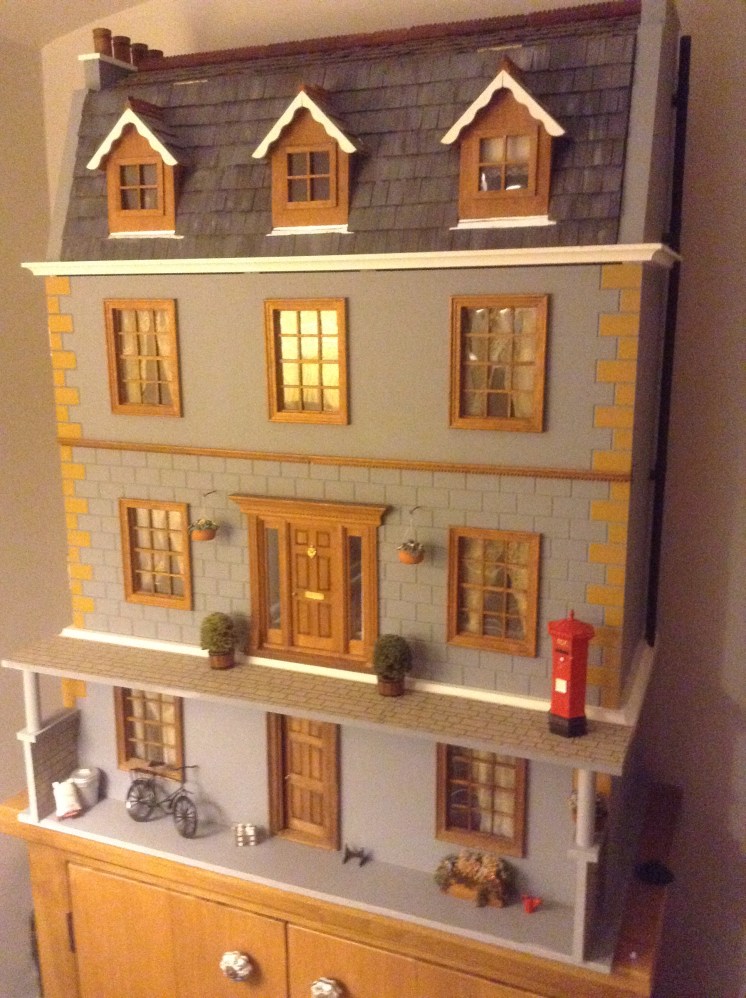
I have recently inherited a dolls’ house, and it has made me think a bit about houses, homes and the stories that they tell, as well as the ideal world that the dolls house reveals in its miniature perfection.

The story of this dolls’ house begins with a “Once upon a time …”

The dolls’ house belonged to my Aunty Chris, who sadly died earlier this year in her late 80s. (I should point out that she wasn’t really a biological aunt, but my godmother: not a fairy godmother, admittedly, but a godmother nonetheless.) image1 (58)

Aunty Chris had a fairytale chidlhood, but not in a good way: her mother died when she was very young and her step-mother didn’t treat her kindly. She had always wanted a dolls’ house, but never had one as a child. Her husband, my Uncle Peter built this one for her in the 1990s after they retired and they moved to Goathland in the heart of the Yorkshire Moors.

When the TV series Heartbeat started filming in Goathland Chris and Pete got involved. Pete was an extra – in the early series you can spot him, often along with Tasha the spaniel, sporting a very fine moustache! Chris provided board and lodgings for one of the make-up crew and some of the money from their adventures in “Aidensfield” (as Goathland was renamed for the series) was invested into the dolls’ house.

inkedimage1-61_li.jpg

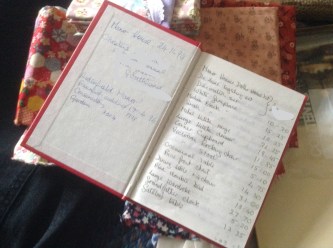
Making the dolls’ house was a real labour of love for both Chris and Pete. They listed everything that they made and bought for the house in a little red notebook; Pete not only built the house but made some of the furniture for it himself, and Chris sewed carpets and soft furnishings, and the finished house was amazing. I used to enjoy looking at it whenever we went to see Chris and Pete, and I was incredibly touched when I heard that she wanted me to have it in her will.

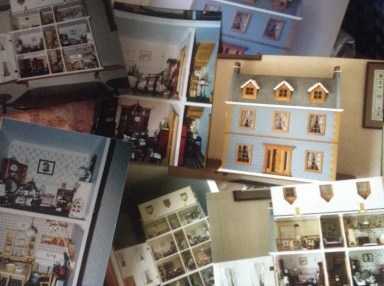
With the dolls house came a fascinating history. Photographs of the house when first constructed, documents from the company which sold it to certify its authenticity, as well as that little notebook listing where everything came from.

image1 (60)

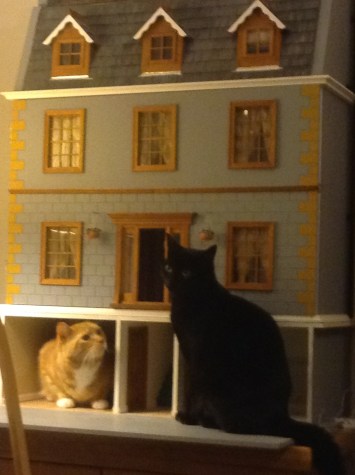
So, when the dolls house arrived, I left it empty for a while, with the furniture carefully packed away in boxes. It took a little while to decide that I wanted to change a few rooms around – Chris had added to the original house so she had a kitchen on the main floor of the house and a music room in the basement which was added later – I wanted to change this round to have both the kitchen and the scullery “below stairs” for a start. While it stood empty, a couple of curious new residents moved in:

image1 (59)

And now it’s ready to start a new chapter in it’s story.  My husband has carefully altered the original structure (slightly) to fit into its new home, and I’m ready to start furnishing and redecorating in the weeks ahead – if I can get the cats out, that is – beginning a new chapter in it’s story.


Owls in the night – my “Go To” list.

It was the owl that reminded me of my lifetime list. You see, what happened was this. On my “To Do” list (what other people might call a bucket list but I find that a bit morbid so I’ve christened it my “lifetime list”) was “See an owl in flight at night”. This has been on my list for YEARS ever since I was about sixteen, only holiday with my family and my father had a close encounter with a barn owl. I wanted to have one too. I lurked around the farmyard (we were staying on a farm for a week) but I never saw the owl. So I was determined. I was going to see an owl. I looked out wherever we went; just about everyone else in the family had close encounters of their own (my daughter spotted an owl asleep in a gutter at her school one day!) but still I saw no owl. Until one night during the summer. We had the windows wide open because it was so hot and I was woken by a loud hooting. Finally, this was it. It was so close, this had to be the day … or rather night. I looked out – nothing. No movement, no hooting, no owl. I sadly closed the window, once again I had missed my chance … at which point the owl, which had been sitting on top of the dormer window right above my head all the time, promptly took off right in front of my eyes!

Owl, Camouflage, Wildlife, Bird Of Prey

A large part of my list is places that I want to go; many of which I have read about in books.  There were ten places on it, and, admittedly some of them are overseas and therefore unlikely ever to get to the top of the list, but four out of ten are British and after ten years only one has been crossed off. I did make it to the Globe Theatre (though I STILL haven’t seen a play there) and I guess it’s Shakespeare connections just about qualify it as a literature related destination.

image1 (10)

There’s another theatre on my list too – the Minack Theatre in Cornwall, an open air theatre perched on the side of a cliff. I’ve wanted to go there for nearly as long as I wanted to see an owl but I don’t somehow think that I’ll find the Minack Theatre unexpectedly perched on a roof above my head.

Minack Theater, Cornwall, South Gland

It seems an impossibly romantic setting for a theatre, (or even for a novel!) and it must be an amazing backdrop for a play, but Cornwall’s a long way from Yorkshire. I haven’t been to Cornwall since I made the list. I did go once, many years ago with my parents, on a literary pilgrimage (perhaps part of an earlier list of places that I had to go to) inspired by the works of Daphne Du Maurier. I wanted to see the real places behind the fiction. Fowey was beautiful but to my massive disappointment I could only peer at Menabilly, the setting for my two most beloved Du Maurier novels, Rebecca and The King’s General, from a long, long way away.  Maybe I’ll get to visit Cornwall again one day, and get to see Minack for myself – possibly when I’m least expecting it – after all, it was that holiday in Cornwall where my dad saw his barn owl; that’s got to be an omen, hasn’t it?

Cornwall, Gweek, Estuary, River, Boats

Pictures from Pixabay (freely available), except for the Globe Theatre which was taken by Daniel Taylorson.

New directions

I’ve been thinking a lot about books  and what I like about them over the summer as we visited York, the Lake District and Northumberland in the campervan, which gave us time for relaxing and reading

image1 (7)

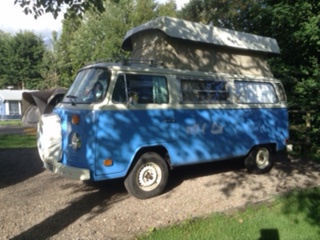
My lovely husband relaxing in “Big Blue” who is not very big and only partially blue.

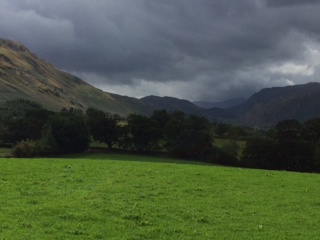
And it came to me, one cold, wet, windy evening in a field near Keswick , that what I like most about reading is being taken somewhere else.

image1 (8)

A cold, wet, windy field near Keswick.


pool-1395071_960_720

Somewhere else.

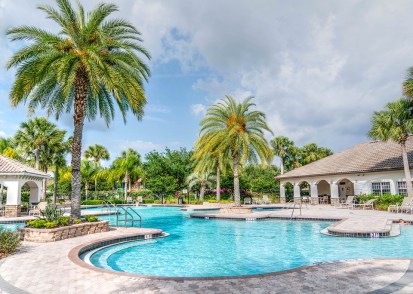
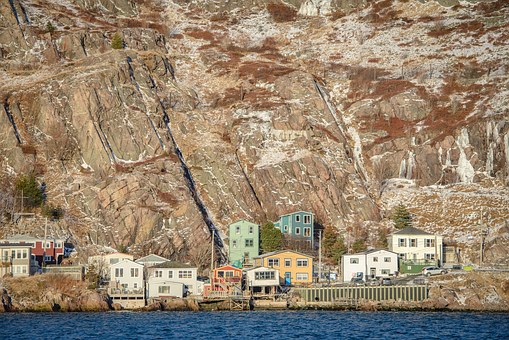
The most vivid example of this I can remember was over 20 years ago when I was on holiday in Turkey. Picture the scene, similar to the one above; I’m sitting in thirty degrees of sunshine, beside the pool, I’ve got a cup of apple tea in one hand and a book in the other. But one of my clearest memories of that holiday isn’t the pool, but what I read. I was reading “The Shipping News” by Annie Proulx and I spent a couple of days of my Turkish holiday mentally  in Newfoundland. Which, in my imagination, was somewhat colder than Turkey, but just as memorable.

battery-1284262__340

Newfoundland. Slightly colder than Turkey.

Then I thought about my own writing. The first thing I do is always create a setting for my characters – as yet I haven’t used any real places though. I’ve created fishing villages, stately homes and now I’m working on a Lake District valley. Each new place has to have its own architecture, geography, history. It has to have the right name, and I have to create a map or a plan. Once I’ve got the place right, the rest follows.

image1 (24)

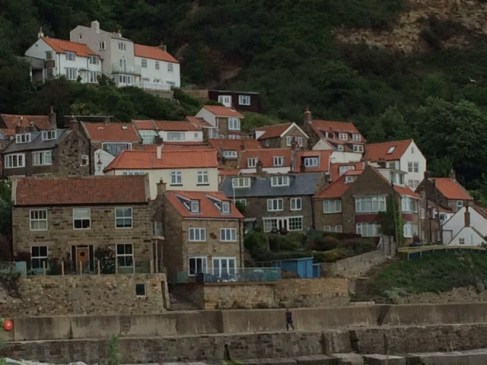
Runswick Bay, one of the places that inspires me and that features in “Little Church …”

So I thought it made sense to spend a bit of time thinking about places in fiction, real places and imagined places in my own fiction and that written by other people. I’ll be writing some posts about places that have inspired me, some posts about places in my own novels and reviewing some novels by my favourite writers which have a strong sense of place of their own. I might even ask some of my writing friends to tell me about the places where they set their novels.

And who knows where else “Big Blue” might take my imagination?

image1 (9)

“Big Blue” in a field near Keswick.