It’s summer, and “Big Blue” the family VW Camper Van (who isn’t very big and isn’t entirely blue either) is on the road.
In my imagination, and in the romantic novel I would write about it, this is how a camper van based glamping weekend would go: Married couple arrive at a beautiful little campsite beside the sea/a stream/a lake where they relax in the sun: drinking wine, eating locally produced artisan food cooked over a small campfire and they rediscover the delights of each other’s company in the bucolic surroundings, whilst helping the young couple in the next campsite pitch learn about love and camping at the same time.
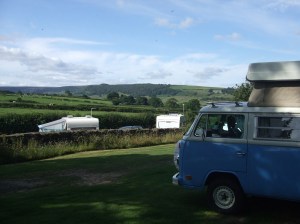
What actually happens on one of our campervan holidays is this:
We arrive at the campsite, which is already waterlogged from the previous month’s downpour, and put up the awning, in the rain, as the children refuse to help and demand to go to the nearest amusement arcade NOW. The children get bored while we put up the awning. They fight. I shout at them.
We drive 20 miles looking for a shop that sells locally produced artisan food, and find the Spar at the local garage just next to the campsite is our best option after all. Oh well, at least we can guarantee that the kids will actually eat their Mr. Kipling’s cakes and Ginster’s pasties.
We take an instant dislike to the family on the next campsite pitch, whose child spends the entire weekend kicking a football at the campervan while his parents and their friends drink cheap cans of lager and sing karaoke (despite the campsite’s “no noise” rule).
It’s still raining, so there is to be no campfire tonight. We walk to the pub for a meal instead. The locals stare at us in hostility. Perhaps it’s the offensive odour of dampness that my coat has started to give off already.
We sleep, badly, as the karaoke continues until midnight and then we are woken at about 2 am by the thunderstorm from hell. The awning leaks in said thunderstorm and we find a large muddy puddle has collected inside the awning when we have to get up in the night to go to take the kids the toilet block. The kids now whine for another hour about their wet feet and want a hot water bottle each. I haven’t got a hot water bottle. I shout at them.
Breakfast. Both children decide they want coco pops and ONLY coco pops for breakfast. We’ve already eaten both the packets of coco pops from the cereal selection pack. The children fight over the one remaining packet of frosties. I shout at them.
We have a day out. The countryside walk that we had planned is not going to happen in this rain so we go to the seaside. Vast amounts of money are spent in the amusement arcades until the children both win implausibly large and impossibly ugly stuffed gorillas. There is some animated debate between the children about whose is the best gorilla, despite the fact that they are identical. I shout at them.
We come home to the campervan, and I’m determined to relax with a cup of tea and my book for half an hour. I discover that I have somehow managed not to download the book I wanted to read, and we have no wi-fi. One of the children’s gorillas gets hurled at the other child and knocks my cup of tea all over the campervan. I shout at them.
The kids cry. My husband threatens to take us all home again RIGHT NOW. We go to bed at 8.30 at night because there is nothing else to do on a campsite in the middle of the countryside, in the dark and the rain with no wi-fi.
We wake up the next morning, half relieved that we are going home today and can finally get dry again. We pack up; the campervan, the awning and every piece of clothing we brought is wet. We get stuck in the mud as we pull off the pitch. We turn out of the drive at the end of the campsite …
And THEN the sun comes out!
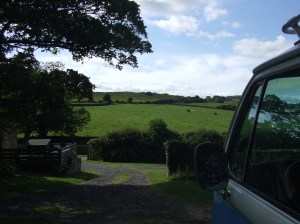
[You may notice, of course, that the pictures of “Big Blue” do actually feature some sunshine. It isn’t always that bad – although, perhaps it’s only fair to point out that the picture above was taken as we waited for the AA …]



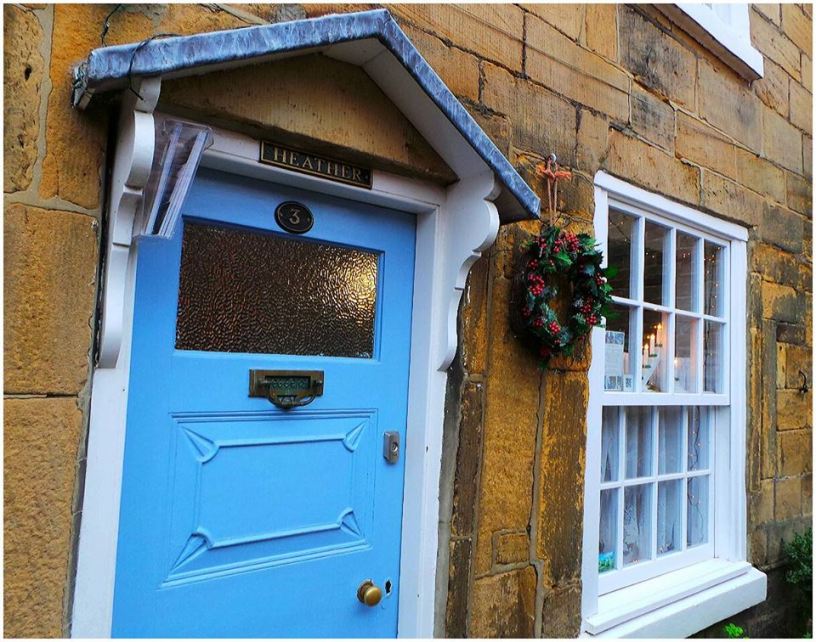


 There were several villages in North Yorkshire that helped to inspire the fictional village of Rawscar, the setting for my forthcoming novel “The Little Church by the Sea”. Village number one is the lovely Runswick Bay, which has one of the few coastal thatched cottages on the whole of the North Yorkshire coast. (I haven’t researched extensively, but it’s the only one I’ve ever seen). The thatched cottage doesn’t appear in the book though!
 The little village tumbles down the hill, the paths between the cottages only big enough for a wheelbarrow, no room for a car. With some very few exceptions, the people who stay in Runswick Bay have to park in the village car park and walk to their holiday homes. There are a few full-time residents of the village, but most of them live in the flat bit at the top of the hill; not so picturesque but easier to reach by car!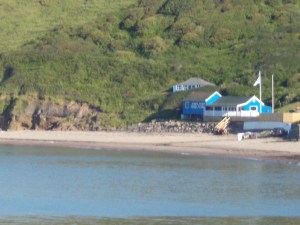



 Liz Taylorson